BMW Oil Leak Repair
Oil leaks aren’t always accompanied by obvious warning signs. A vehicle can continue to drive normally, with no dashboard alerts and no noticeable changes in performance, while oil loss develops gradually underneath.
When there’s no clear indication of where oil is escaping from, understanding the source becomes essential. Different oil leaks can have very different consequences if left unresolved, which is why identifying the cause accurately matters far more than making assumptions based on where oil appears.
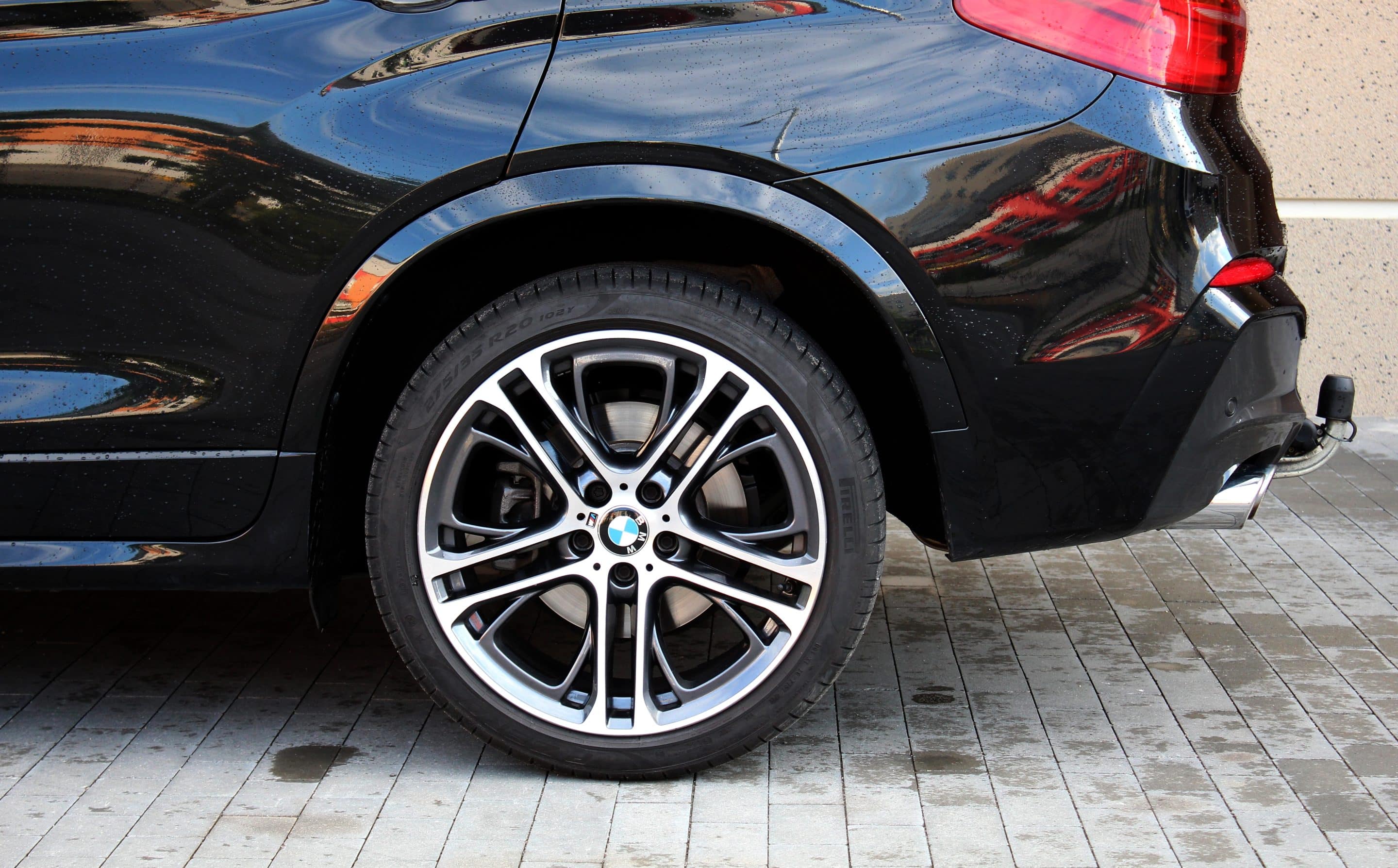
That was the situation Mr D faced with his BMW M40i. Oil had begun appearing beneath the rear of the vehicle, yet there was nothing to suggest a fault from behind the wheel. With no clear explanation and the marks continuing to return, it was evident that the issue needed a full investigation by professionals.
On the strength of a recommendation, Mr D booked the BMW in with Quality Car Service in Milton Keynes, a BMW specialist garage known for a structured approach to fault-finding.
Before any repair could be discussed, the real challenge was understanding exactly where the oil was coming from and why it was appearing at the rear.
Read on to find out how we got to the bottom of the BMW M40i repair.

BMW Differential Oil Leak: Starting The Investigation
When the BMW arrived at Quality Car Service in Milton Keynes, the first priority was to establish how the oil loss had presented over time. By speaking with Mr D, we were able to establish the pattern behind the oil leak. This helped shape how the inspection would be approached and where attention needed to be focused first.
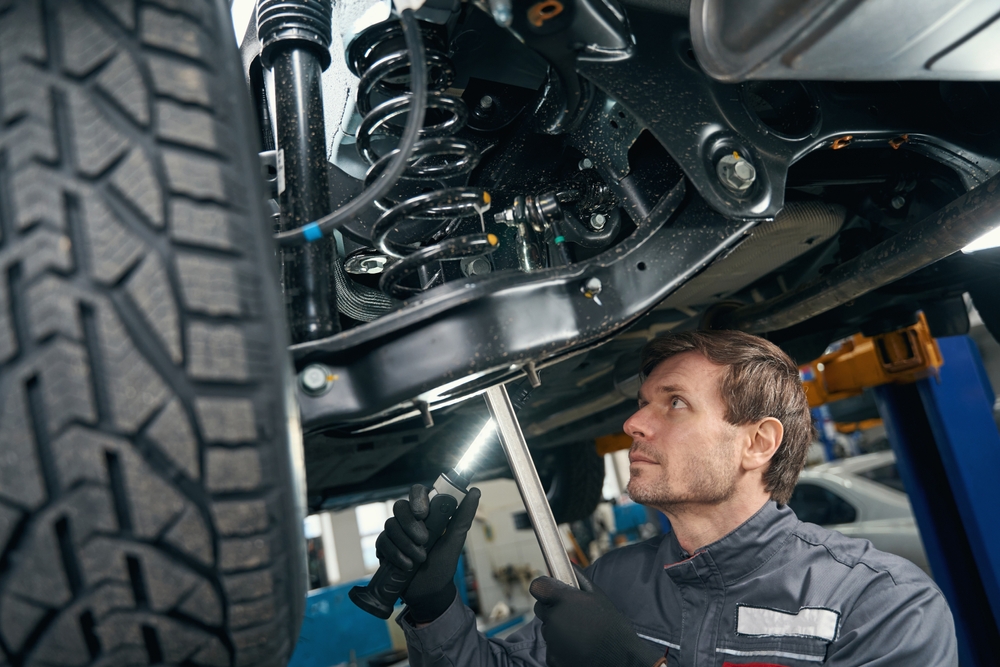
The BMW was raised on the ramp to allow a full inspection of the underside. Oil residue was visible around the rear of the vehicle, and its condition suggested that it was fresh rather than left behind from previous work. This confirmed that the oil leak was active and required further investigation.
Based on where the oil was present and the layout of the BMW M40i, attention turned towards the rear drivetrain. Oil loss in the rear drivetrain deserves close attention due to the demands placed on these components during normal driving. Identifying the exact source of oil loss is essential before any repair work can be discussed.
As part of the initial checks, the BMW was also scanned for stored fault codes. Some oil leaks can be linked to fault codes, while others are not. A fault-code check was carried out to ensure there were no related issues influencing the oil loss. No fault codes were present.
At this stage, the presence of an oil leak had been confirmed, but its precise point of escape had not yet been established. A more detailed inspection of the rear drivetrain was needed to reach a reliable conclusion.
BMW Differential Oil Leak: Tracing Oil Loss Through the Rear Drivetrain
With the initial assessment complete, attention turned to tracing the oil back to its source. On vehicles like the BMW M40i, oil does not always appear directly beneath the component that has failed. As the vehicle is driven, oil can spread across casings, shields, and underbody panels before it becomes visible externally.
To remove any uncertainty caused by oil that had already migrated, the rear underside of the BMW was cleaned thoroughly. This created a clear baseline and made it easier to distinguish between older residue and fresh oil appearing once the area was reassessed.
Working Through the Possible Sources
With a clean starting point established, the inspection focused on the rear drivetrain components most likely to be involved. Several areas were considered at this stage, including the differential casing itself, the output points where the drive shafts exit the unit, and the input area where the prop shaft connects to the differential.
Each of these locations was checked in turn. The differential casing was examined closely along sealing faces and joint lines, but no fresh oil appeared once the area had been cleaned. The inspection then moved to the output shaft areas. Oil leaks here can sometimes spread across surrounding components before becoming visible, but both sides remained dry when reassessed.
By systematically ruling out these possibilities, the focus of the inspection narrowed to a smaller, more specific area at the front of the differential.
Identifying the Source of the Oil Loss
As the inspection continued, a consistent pattern began to emerge. Fresh oil was forming at the front of the differential, concentrated around the point where the prop shaft enters the unit. This behaviour differed from the areas already ruled out and indicated that the source of the leak lay at the differential input.
Attention turned to the rear differential input shaft oil seal. This seal allows the input shaft to rotate continuously while retaining oil within the differential. When the seal begins to deteriorate, oil can escape under load and spread across the surrounding area.
Further checks confirmed this was exactly what was happening. Oil was tracking from the input shaft area, with no evidence of leakage elsewhere on the differential. The oil level and condition were also assessed, confirming that the BMW differential oil leak had been identified before any wider damage had developed.
With all other potential sources ruled out, the rear differential input shaft oil seal could be identified with confidence as the cause of the oil loss. With the issue clearly established, the next step was to plan the repair.
BMW Rear Differential Oil Leak Repair Steps
Now the source of the oil loss had been identified, the findings were explained to Mr D, including why the rear differential input shaft oil seal had failed and what would be involved in resolving the issue. With approval given, the BMW was prepared for repair.
Preparation and Repair Guidance
BMW repair guidance was referenced before any components were removed. This ensured the correct procedures and tightening values would be followed throughout the repair. Specialist BMW tooling was prepared in advance so the work could be carried out to BMW standards.
Accessing the Differential Input Area
The vehicle was positioned to allow safe access to the rear drivetrain. The connection between the prop shaft and the differential was accessed, exposing the input shaft area where the failed seal was located. Only the components required to reach the affected area were removed, keeping the process controlled and focused.
Replacing the Failed Seal
The rear differential input shaft oil seal was removed carefully. The surrounding area and sealing surfaces were inspected again at this stage to confirm there were no additional sources of oil leakage.
A BMW-approved replacement oil seal was installed, completing the rear differential seal replacement. Care was taken to ensure the seal was positioned correctly so it could retain oil within the differential while accommodating continuous shaft rotation.
Restoring Differential Oil and Reassembly
As oil had been lost due to the leak, the differential oil was replaced using BMW-approved lubricant. Restoring the oil to the correct level ensures the differential continues to operate as intended.
All removed components were refitted in line with BMW procedures and tightened to the specified torque values. The repair area was then cleaned to allow a clear inspection.
BMW M40i Repair: Final Checks Before Return
Before the BMW was returned to Mr D, the repair area was rechecked to confirm there were no signs of residual oil leakage. Oil levels were verified, and the rear of the vehicle was inspected again to ensure the repair had fully addressed the issue.
Because the required parts were already in stock, the repair could be completed within a single day, with all work carried out to BMW standards. This ensured the issue was resolved thoroughly without unnecessary delay.
A complimentary vehicle health check was also carried out, providing additional reassurance that no related issues were present elsewhere on the BMW.
Need BMW Oil Leak Repair Specialists in Milton Keynes?
Rear oil leaks can be difficult to diagnose without a careful, step-by-step inspection. Confirming the source of oil loss before carrying out any repair work helps ensure the correct solution is applied first time.
Mr D chose Quality Car Service, a BMW specialist garage, following a recommendation and with the expectation that the issue would be investigated properly before any work was undertaken. By explaining the findings clearly and outlining the repair process in advance, the team were able to resolve the problem with confidence.
Why drivers choose Quality Car Service:
- Experienced technicians with a structured, evidence-led approach to BMW oil leak diagnosis
- Access to BMW manufacturer repair information and specialist tooling
- Clear explanations before any repair work begins
- Free courtesy car to minimise disruption
- 12-month parts and labour guarantee
That approach is reflected in our {{average-rating}}-star Google rating from {{review-count}} customers who trust Quality Car Service for professional BMW repairs.
Call 01908 376555 to book your BMW in for a technical evaluation. Have your oil leak looked at by local BMW experts you can trust.