BMW Exhaust Camshaft Problem
“It’s clearly not running as it should.”
That was the concern raised by Mrs N, who runs a nearby used-car dealership.
A recently sold BMW 118i had been returned after the customer experienced uneven idling and repeated BMW engine warning light alerts. Checks carried out by the used-car dealership hadn’t uncovered what was causing the behaviour.
With no clear explanation for the rough idle problem, Mrs N brought the BMW 118i to our experts at Quality Car Service, Milton Keynes, for a more detailed review.
Although the cause wasn’t immediately obvious, the symptoms suggested a fault that required a more detailed diagnostic process. What followed was a structured review that allowed us to identify a BMW exhaust camshaft problem affecting the engine’s timing.
Throughout this blog, you’ll discover how the fault was uncovered, the root cause of the BMW 118i rough idle, and how we restored smooth, dependable operation.

Our Initial Assessment to Understand the BMW 118i Rough Idle
When the BMW 118i arrived at Quality Car Service, Milton Keynes, our technicians began by listening to Mrs N’s experience with the vehicle, then confirmed the reported symptoms through a structured assessment.
Mrs N explained that the BMW had been showing a BMW engine warning light, idling unevenly, and occasionally displaying a drivetrain malfunction message. Checks previously carried out by the used-car dealership hadn’t identified the cause, so the focus shifted to understanding what the vehicle’s systems were reporting.
Using this information, our initial review included:
- A visual check under the bonnet to identify any disturbed components or signs of previous work.
- A complete system scan using BMW manufacturer data to identify stored or active fault codes.
- A controlled engine start to assess idle stability and overall engine behaviour.
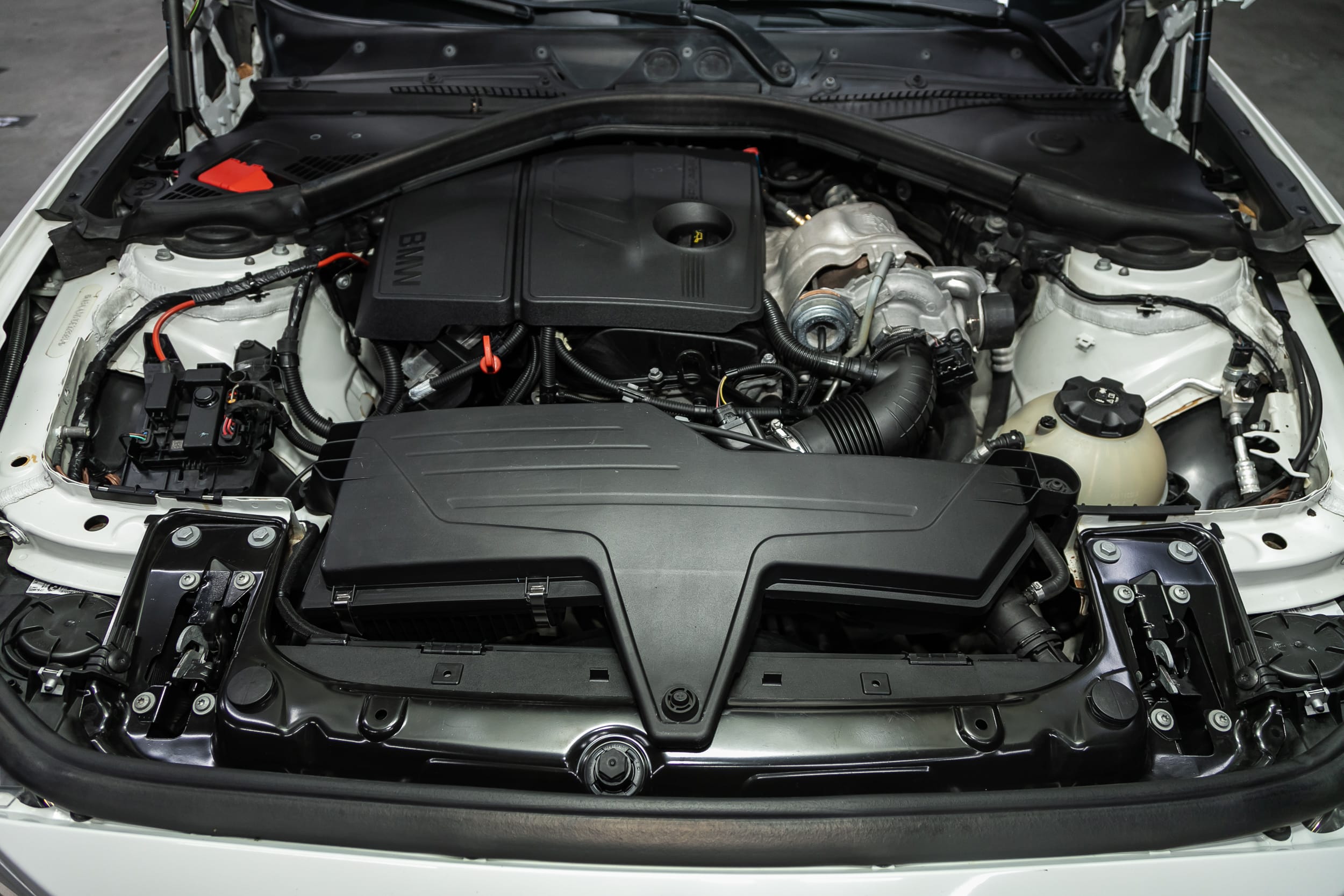
The visual inspection didn’t reveal an obvious explanation, so the next step was to examine the fault code data in more detail.
The scan identified two fault codes that were directly related to the reported concerns:
- 130304 – VANOS exhaust cam jammed
- 160021 – Crankshaft sensor loss of synchronisation
(VANOS is BMW’s trademarked name for its variable valve timing system, which adjusts camshaft positioning to support efficient engine operation.)
Together, these findings showed three important points:
- The engine control unit had detected a fault affecting exhaust camshaft control and VANOS operation.
- Crankshaft and camshaft timing were no longer correctly synchronised.
- The BMW 118i rough idle and BMW engine warning light were linked, not separate problems.
Although the fault codes supported the symptoms, further testing was required to identify the cause of this BMW exhaust camshaft problem.
How the BMW 118i Camshaft Fault Was Identified
After the initial checks confirmed VANOS-related and synchronisation faults, our experts’ attention shifted to the BMW 118i engine timing system. Several components influence timing accuracy, so if we wanted to get to the bottom of the problem, a structured, evidence-led approach was essential.
Using the official BMW technical data and guided testing routines, our technicians followed a structured plan:
- Electronically verify engine timing using an oscilloscope to compare camshaft and crankshaft signals.
- Remove the rocker cover and associated components to allow physical inspection of the timing system.
- Assess the VANOS components to determine whether the issue involved the control valves, pulley mechanism, or the camshaft itself.
The oscilloscope results marked a clear turning point in the investigation. The signal patterns were consistent with incorrect exhaust camshaft timing, ruling out a sensor-only issue and prompting us to proceed to a mechanical inspection.
To confirm this, the rocker cover and high-pressure fuel injectors were removed, giving full access to the camshaft and timing assembly. This allowed precise physical timing checks to be carried out.
Both electronic testing and mechanical measurement led to the same outcome.
The exhaust camshaft was not reaching the correct position in relation to the crankshaft.
This prompted further investigation into the systems responsible for controlling and monitoring exhaust camshaft timing.
Two related faults were found:
- An issue within the exhaust camshaft timing adjustment system that prevented correct camshaft positioning.
- A problem affecting how the exhaust camshaft position reference was being read.
As a result, the BMW’s engine control system couldn’t reliably match the commanded camshaft position to its actual position, leading to incorrect valve timing. This was most noticeable at idle, triggering the BMW engine warning light, unstable running, and the drivetrain malfunction message.
With the BMW exhaust camshaft problem confirmed, the next step was to carry out the repair required to restore correct engine timing and regular operation.
Repairing the BMW Exhaust Camshaft Problem on This BMW 118i
Once the cause of the BMW exhaust camshaft problem had been confirmed, our BMW technicians contacted Mrs N to explain the findings clearly and outline what would be required to restore correct exhaust camshaft timing.
This gave her a clear understanding of what was behind the issue and what work would be needed to resolve it.
At Quality Car Service, Milton Keynes, no work goes ahead until everything has been fully discussed and agreed. This ensures you stay informed and in control throughout the entire repair process.
After reviewing the findings with our BMW experts, Mrs N approved the recommended repairs and confirmed we could proceed.
With the repair given the green light, our experts sourced high-quality BMW replacement components and began the repair, following BMW repair procedures carefully at each stage.
The repair was completed in the following stages:
1. Removing the affected timing components
To reach the faulty parts, the required upper engine components were removed in line with BMW repair guidance. This allowed safe access to the exhaust camshaft timing components, preparing the engine for repair.
2. Installing the replacement exhaust camshaft and timing components
The replacement exhaust camshaft and associated timing parts were installed in accordance with BMW manufacturer procedures. This ensured accurate positioning and dependable operation once reassembled.
3. Renewing supporting timing-control components
Related timing-control components, including elements of the VANOS system, were renewed as part of the repair to support reliable camshaft operation after reassembly.
4. Setting and confirming engine timing using BMW timing tools
With the new components in place, engine timing was set and verified to confirm the camshaft and crankshaft were correctly synchronised as specified by BMW.
5. Final engine reassembly
Once timing had been confirmed, our technicians carried out full engine reassembly, following BMW procedures to ensure all components were refitted correctly and securely.
With reassembly complete, the BMW 118i was ready to move into the final confirmation stage.
Confirming Normal Operation After BMW Camshaft Repairs
Once the repair was complete, our BMW technicians carried out a series of checks to confirm the camshaft timing fault had been fully addressed and that the engine was performing as expected.
As part of this final confirmation process, our BMW experts:
- Rechecked camshaft and crankshaft timing following reassembly.
- Ran system checks to ensure no related faults were present.
- Observed engine behaviour at idle and during a controlled road test.
These checks confirmed that exhaust camshaft timing was now correct, the BMW 118i rough idle had been resolved, and the drivetrain malfunction message no longer appeared.
After completing the checks, we contacted Mrs N to explain that the repair was complete and the BMW was ready for collection.
She was pleased with the repair work, the clear communication throughout the process, and the overall value provided, leaving her confident the BMW was back in top condition.
The vehicle left Quality Car Service, Milton Keynes, running smoothly, with no BMW exhaust camshaft problem, no BMW engine warning lights, and no rough idle issues present.
BMW Exhaust Camshaft Problem? Book Your BMW Check-Up at Quality Car Service
If your BMW 1 Series is running unevenly at idle or showing an engine warning light, it’s important to have it checked before the issue worsens.
BMW engine timing issues can develop for several reasons, and identifying the cause early can help limit further damage and reduce the risk of a more costly BMW 1 Series engine repair.
Accurate testing by BMW experts is key to understanding what’s really happening within your vehicle’s engine and pinpointing the root cause of the issue.
At Quality Car Service, Milton Keynes, our team uses BMW technical data, manufacturer-level technology, and hands-on experience to investigate BMW exhaust camshaft problems, BMW VANOS failure, and wider BMW engine timing issues.
Here’s why drivers across Milton Keynes and the surrounding areas choose us for BMW engine repair:
- BMW experts working on your vehicle.
- Repairs backed by a 12-month parts and labour guarantee.
- A complimentary courtesy car while we work on your vehicle.
Join the {{review-count}} other drivers who’ve rated us {{average-rating}} stars on Google for accurate repairs and value.
If your BMW shows warning lights or timing-related concerns, call Quality Car Service, Milton Keynes, on 01908 376555 to book your BMW check-up today.